Co-funded by the European Union /Marie Skłodowska-Curie Actions /Horizon Europe A joint TAILOR & DONUT initiative

Joint Doctoral Summer School · Marie Skłodowska-Curie Doctoral Networks

Bridging Minds & Machines

The Joint Doctoral Summer School of the MSCA Doctoral Networks TAILOR & DONUT.

Advanced research training in Rehabilitation Robotics, Brain–Computer Interfaces and Responsible Artificial Intelligence.

Rehabilitation RoboticsBrain–Computer InterfacesResponsible AIClinical Translation
29 June – 2 July 2027 Universidad Miguel Hernández · Elche, Spain
One SchoolTwo NetworksOne Scientific Community

Bringing together Europe's next generation of researchers and internationally leading scientists to advance intelligent neurorehabilitation technologies.

Two Horizon Europe Marie Skłodowska-Curie Doctoral Networks join forces to deliver a single advanced doctoral programme at the intersection of artificial intelligence, neuroscience, robotics and clinical rehabilitation — designed for doctoral candidates, their supervisors and researchers shaping the future of the field.

2
MSCA Doctoral Networks, one joint school
22
Universities, institutes, hospitals & industry partners
12
Countries across Europe
80
Doctoral researchers in the cohort
4
Days of lectures, workshops & posters

Why this Summer School

A flagship doctoral event, not a workshop on the side.

Built on the standards of two competitively-funded European doctoral networks, the school combines scientific depth with the breadth that only an interdisciplinary, intersectoral programme can offer.

International faculty

Lectures from world-leading scientists in rehabilitation robotics, brain–computer interfaces and responsible AI.

Advanced hands-on workshops

Practical sessions where you work directly with the methods, devices and data behind the field.

Scientific networking

A peer cohort and senior researchers spanning robotics, neuroscience, AI, ethics and the clinic.

Career development

Transferable skills, interaction with industry and clinicians, and entry into a Europe-wide research community.

§ 01 — Scientific scope

Integrating Brain–Computer Interfaces, Rehabilitation Robotics and Responsible AI.

Neurological injury and disease impose an immense personal and societal burden. Robotics and artificial intelligence promise to transform recovery — yet progress is held back by a persistent gap: those who design the algorithms, those who build the devices, and those who deliver therapy too rarely train together.

This school is intentionally interdisciplinary. TAILOR works to bring rehabilitation robots into routine clinical practice through AI-driven exoskeleton control; DONUT advances brain–computer interfaces and neural prostheses. Across both lies one imperative — responsible, trustworthy, clinically valid AI for human–machine systems in healthcare.

Artificial IntelligenceRoboticsNeuroscienceRehabilitationClinical EngineeringEthicsHuman Factors
DONUT · the mind

Reading the brain

Brain–computer interfaces, EEG decoding and neural prostheses — from restoring communication to post-stroke recovery.

Common ground

Responsible AI

Trust · transparency · ethics · clinical validation

TAILOR · the machine

Moving the body

AI that tailors exoskeleton-assisted gait therapy to each patient, bringing rehabilitation robots into the clinic.

§ 02 — About the networks

Two Horizon Europe Marie Skłodowska-Curie Doctoral Networks join forces to create one unique advanced doctoral programme.
TAILOR

Training the next generation of researchers that will bring rehab robots to clinical practice

An MSCA Doctoral Network developing AI-driven control of exoskeletons to make gait rehabilitation more autonomous, personalised and clinically effective after stroke and neurological injury.

  • FocusRehabilitation robotics & AI for therapy
  • CoordinatorEduardo Rocon · CSIC–UPM, Centre for Automation and Robotics

DONUT

European Doctoral Network for Neural Prostheses and Brain Research

An MSCA Doctoral Network advancing brain–computer interfaces and EEG technologies — improving quality of life for locked-in patients, supporting post-stroke recovery and bringing BCIs toward everyday use.

  • FocusBrain–computer interfaces & neural prostheses
  • CoordinatorIvan Volosyak · Rhine-Waal University

A Europe-wide consortium

Together the two networks bring leading universities, research institutes, hospitals and industrial partners into a single programme — training doctoral researchers across the continent and beyond.
§ 03 — Scientific themes

Six research topics, one shared frontier.

Keynote lectures and workshops are organised around the topics where the two networks converge — from neural decoding to clinical deployment.

Responsible AI in clinical decision-making

Topic I

Responsible AI

Trustworthy, transparent and human-centred AI for medical settings.

How do we earn a clinician's trust and a regulator's approval?

Lower-limb exoskeleton, gait laboratory

Topic II

Rehabilitation Robotics

Exoskeletons and gait robots with AI controllers that adapt therapy in real time.

Can a robot tailor each step to the patient?

EEG cap for brain–computer interfacing

Topic III

Brain–Computer Interfaces

Decoding neural signals into intent — EEG, neural prostheses and BCIs beyond the lab.

What does it take to read intention reliably?

Therapy session with a clinician

Topic IV

Clinical Translation

Moving research from prototype to evidence, guidelines and routine practice.

Why do so few devices reach the clinic?

Human–robot interaction study

Topic V

Human–Robot Interaction

Intuitive, safe and shared control between therapist, patient and machine.

Who is in control, and when?

Data-driven model of patient recovery

Topic VI

AI for Healthcare

Learning from therapy data to personalise and predict recovery.

What can the data tell us that the clinic cannot?

§ 04 — International faculty

Learn from those defining the field.

Confirmed keynotes from the TAILOR network, with DONUT keynotes and invited external faculty being finalised.

Portrait
TAILOR keynote

Prof. Robert Riener

Director, Sensory-Motor Systems Lab

ETH Zürich

World-leading researcher in rehabilitation robotics and wearable technologies, and founder of the CYBATHLON.

Portrait
TAILOR keynote

Prof. Herman van der Kooij

Biomechatronics & rehabilitation technology

University of Twente · TU Delft

A leading authority on wearable robots, exoskeletons and the neural control of human movement.

Portrait
TAILOR keynote

Dr. Jan Veneman

Wearable robotics & standardisation

Benchmarking & safety of wearable robots

A driving force behind international benchmarking, safety and standardisation of exoskeletons and wearable robots.

Jordy Thielen
DONUT keynote

Jordy Thielen

The code-modulated visual evoked potential (c-VEP): From efficient stimulation to effective decoding for high-speed BCI with minimal to no calibration

Machine Learning & Neural Computing Department, Donders Institute for Brain, Cognition and Behaviour, Radboud University, Nijmegen, Netherlands

Portrait
DONUT keynote

DONUT keynote

Neural prostheses

To be announced

A senior researcher from the DONUT network on neural prostheses and translation.

Portrait
Invited faculty

External speakers

Industry & clinical voices

To be announced

Invited leaders from industry and the clinic, bridging research and practice.

Scientific & organising committee

Convened by the coordinators of the two networks — Eduardo Rocon (TAILOR; Centre for Automation and Robotics, CSIC–UPM) and Ivan Volosyak (DONUT; Rhine-Waal University) — with the local organising team at the Universidad Miguel Hernández de Elche.

Faculty titles, affiliations and the complete DONUT and external line-up will be confirmed ahead of the event.

§ 05 — Scientific programme

Four days, structured for depth.

// Provisional programme — sessions and timings subject to change.

TAILOR DONUT Poster session Networking General
08:00–08:30
Registration & badge pick-upGeneral
08:30–09:00
Welcome & openingEduardo Rocon (TAILOR), Ivan Volosyak (DONUT), J. M. & the UMH Vice-rectorOpening
09:00–10:15
Keynote lecture — Prof. Robert RienerRehabilitation robotics & the CYBATHLONTAILOR
10:15–10:45
Poster flash — 15 posters, 1–2 min eachRapid-fire teasers from doctoral candidatesPosters
10:45–11:30
Moderated poster session & coffeePosters
11:30–13:00
Keynote lecture — DONUTTo be announcedDONUT
13:00–14:30
LunchGeneral
14:30–17:00
Hands-on workshop — TAILORRehabilitation robotics & AI controlTAILOR
20:30–22:30
Welcome receptionOpening networking event for the cohortNetworking
08:30–09:00
Registration & check-inGeneral
09:00–10:15
Keynote lecture — DONUTTo be announcedDONUT
10:15–10:45
Poster flash — 15 posters, 1–2 min eachPosters
10:45–11:30
Moderated poster session & coffeePosters
11:30–13:00
Keynote lecture — Prof. Herman van der KooijBiomechatronics & wearable robotsTAILOR
13:00–14:30
LunchGeneral
14:30–17:00
Networking activity — Mediterranean coastInformal session at Arenales del Sol to foster cross-cohort collaborationsNetworking
08:30–09:00
Registration & check-inGeneral
09:00–10:15
Keynote lecture — DONUTTo be announcedDONUT
10:15–10:45
Poster flash — 15 posters, 1–2 min eachPosters
10:45–11:30
Moderated poster session & coffeePosters
11:30–13:00
Invited keynoteExternal speaker · to be announcedInvited
13:00–14:30
LunchGeneral
14:30–17:00
Hands-on workshop — DONUTBrain–computer interfaces & neural signal processingDONUT
19:00–20:30
Elche walking tourThe historic centre & the UNESCO palm groveNetworking
20:30–22:30
Gala dinner — Huerto del CuraAmong the palms of Elche's celebrated gardenNetworking
08:30–09:00
Registration & check-inGeneral
09:00–10:15
Keynote lecture — Dr. Jan VenemanWearable robotics & exoskeleton standardisationTAILOR
10:15–10:45
Poster flash — 15 posters, 1–2 min eachPosters
10:45–11:30
Moderated poster session & coffeePosters
11:30–13:00
Invited keynoteExternal speaker · to be announcedInvited
13:00–14:30
Closing & farewell lunchClausura — synthesis and next stepsGeneral

§ 06 — Hands-on workshops

Where you work with the methods, not just hear about them.

Two parallel hands-on tracks, led by the networks, take participants from theory to practice. Indicative topics include:

TAILOR track

Robotics & AI for rehabilitation

  • AI-driven control for rehabilitation exoskeletons
  • Real-time exoskeleton control & shared autonomy
  • Modelling and personalising gait therapy
  • Clinical validation & outcome measurement

DONUT track

Brain–computer interfaces

  • EEG acquisition & brain-signal processing
  • Neural decoding pipelines for BCIs
  • Responsible AI & data challenges in BCI
  • From BCI prototype to everyday use

§ 07 — Poster sessions

Every participant presents.

Each day opens with a rapid-fire poster flash, followed by a moderated session designed to stimulate discussion and forge new collaborations across institutions and disciplines.

Presenting is part of the school: it places your work in front of senior faculty and a peer cohort spanning robotics, neuroscience, AI and the clinic — and it is how many of the school's lasting collaborations begin.

Doctoral candidates at a moderated poster session

Scientific networking

Collaborations begin between the sessions.

The social programme is built to connect cohorts and disciplines — by the Mediterranean, through the city, and over dinner.

Day 1 · evening

Welcome reception

An opening networking event to meet the full cohort and faculty.

Day 2 · afternoon

Coastal networking

An informal session at Arenales del Sol to spark interdisciplinary collaborations.

Day 3 · evening

Cultural programme

A guided walk through Elche and its UNESCO palm grove.

Day 3 · dinner

Gala dinner

A celebratory dinner at the historic Huerto del Cura garden.

§ 08 — Venue & location

Universidad Miguel Hernández, Elche.

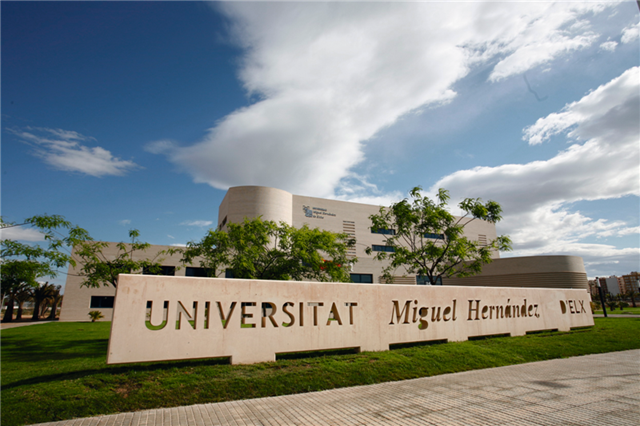
Hosted by a DONUT beneficiary institution in the city of palm groves on Spain's Costa Blanca. Late June in Alicante brings long, warm evenings and direct connections from across Europe through Alicante–Elche airport.

Venue

Cinemateca — Edificio Valona
Avda. de la Universidad s/n, 03202 Elche (Alicante), Spain
Open in maps →

UMH Campus

Why attend

What participants take away.

§ 09 — Applications

Participation is competitive.

Selection

Priority will be given to doctoral candidates of the TAILOR and DONUT Doctoral Networks.

A limited number of external PhD students will be selected on the basis of scientific excellence and alignment with the school's themes.

Applicants submit a short abstract of their research; the scientific committee reviews all applications, and up to 80 participants are admitted to the cohort. Every participant presents a poster.

Important dates

  • Applications openTo be announced
  • Application deadlineTo be announced
  • Notification of acceptanceTo be announced
  • Registration & confirmationTo be announced
  • Summer school29 Jun – 2 Jul 2027

Join the 2027 cohort

Apply to Bridging Minds & Machines.

Eighty places, open by competitive selection to doctoral candidates of TAILOR and DONUT and to PhD students worldwide working at the intersection of AI, rehabilitation robotics and brain–computer interfaces.

// Application portal & deadlines to be announced — check back soon.

§ 09 — Accommodation

Recommended hotels

Conference participants can benefit from special rates at the following hotels. Please use the promotional code when making your reservation.

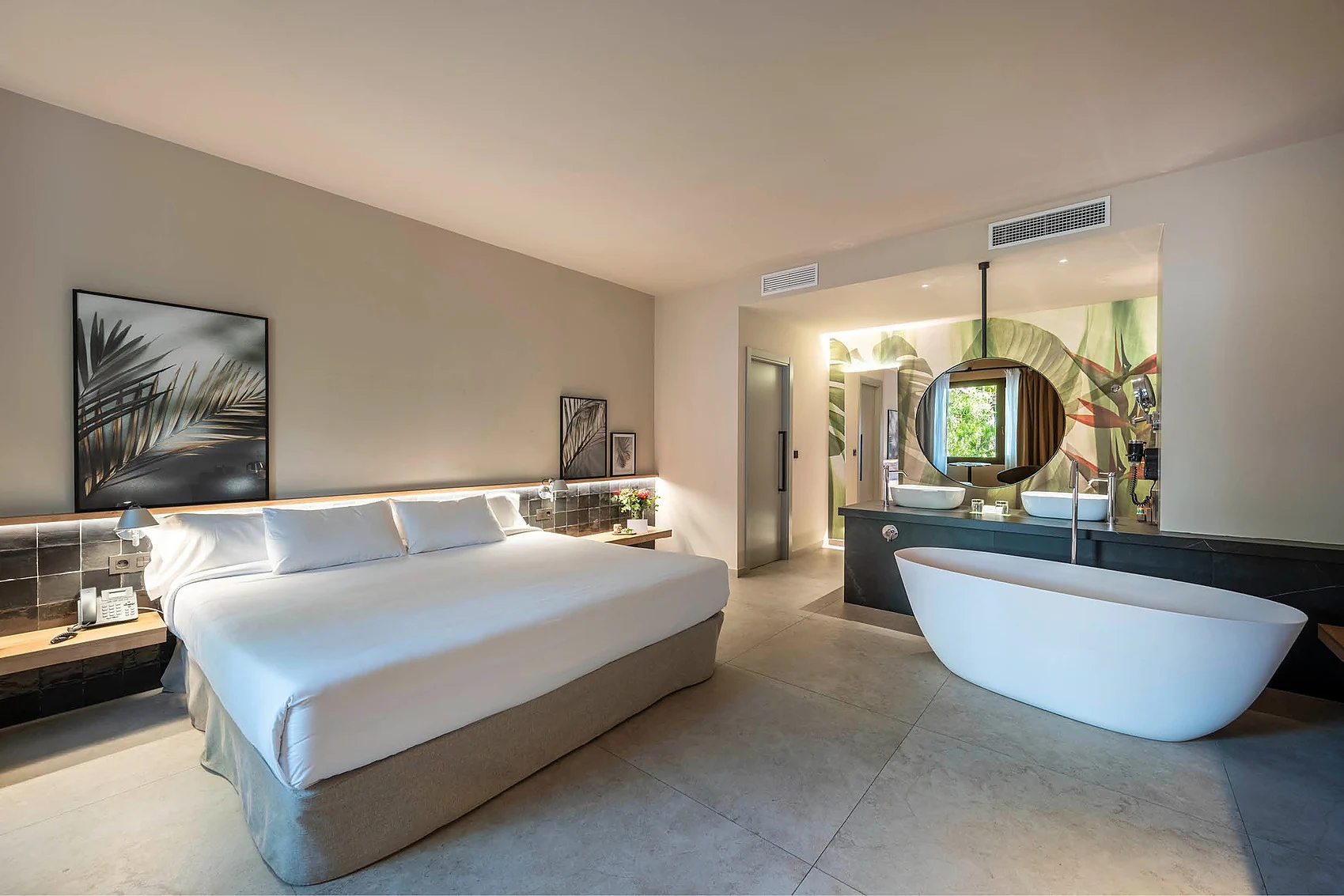
Hotel Huerto del Cura

Hotel Huerto del Cura

Discount code: TAILOR&DONUT27

Book your stay →

Hotel Jardín Milenio

Hotel Huerto del Cura

Discount code: TAILOR&DONUT27

Book your stay →

Hotel Elche Centro – Meliá

Book your stay →